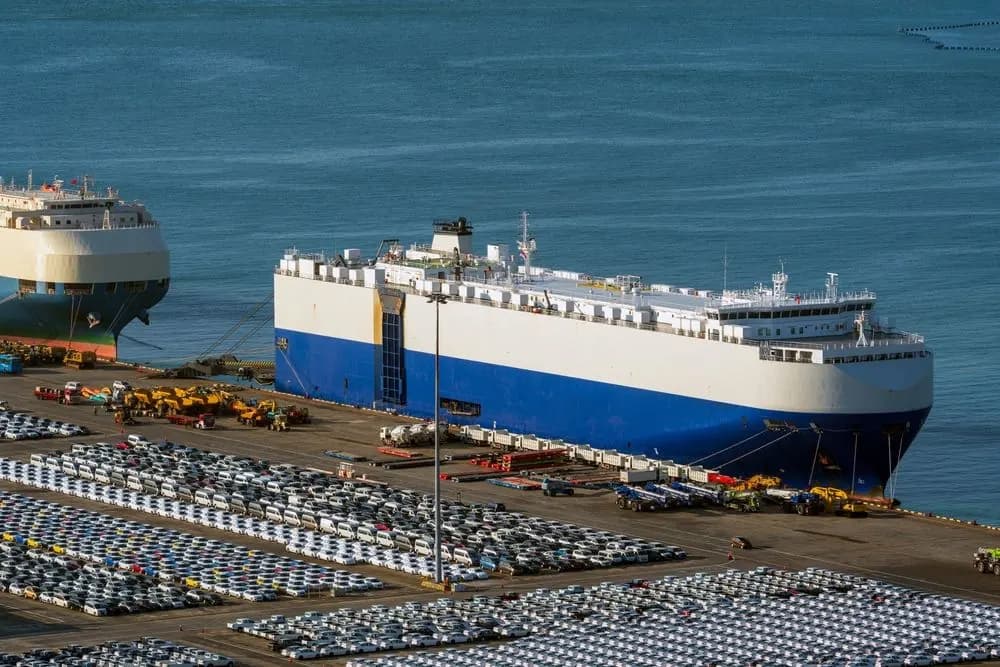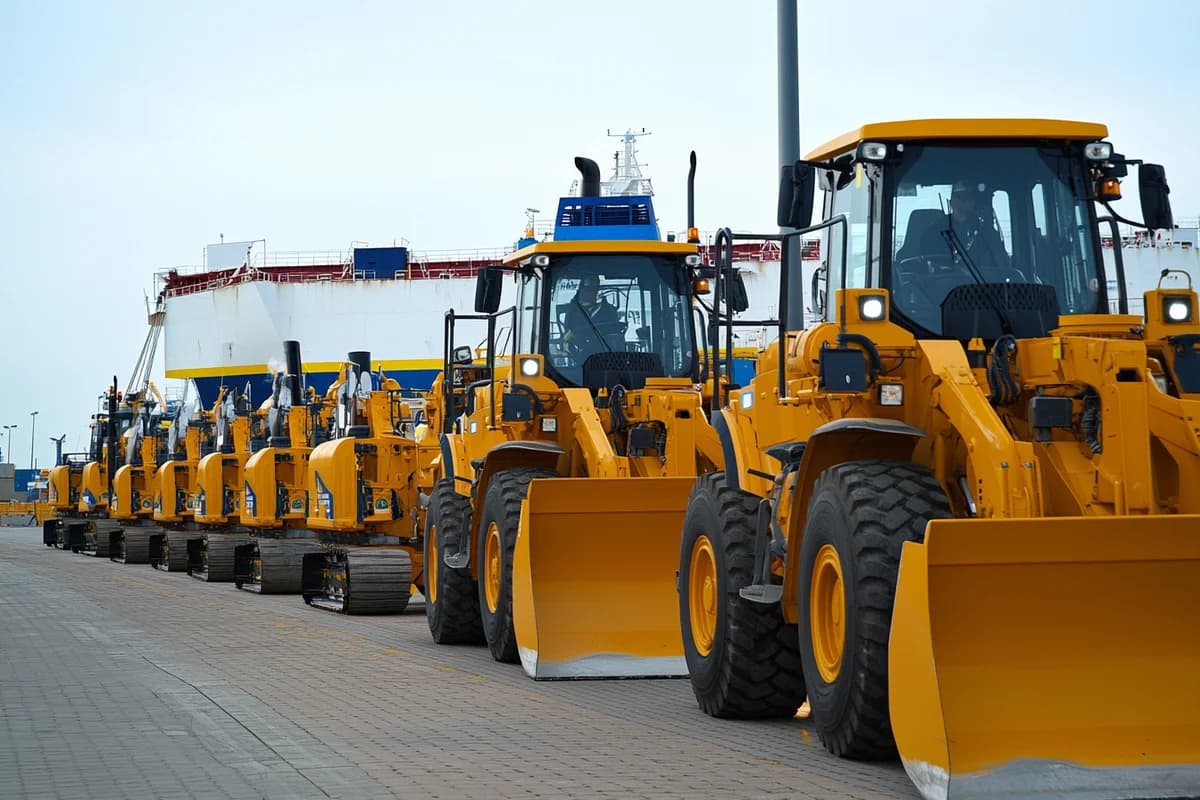
A linear meter is the length of deck space, measured in meters, that a piece of cargo occupies on a RoRo vessel or ferry. Carriers price RoRo freight by linear (and lane) meters because deck length, not weight, is what limits how much a ship can load. To convert a cargo unit to linear meters, divide its footprint by the vessel's standard lane width, which most carriers set between 2.5 and 3.0 meters.
Work it out on your own cargo
The lane meter and linear meter calculator converts a vehicle mix into lane meters, linear meters, and Car Equivalent Units, or sizes how many units fit a given deck. Free, no signup.
Linear Meters: A Method of Freight Calculation
Linear meters are commonly used by carriers to calculate freight charges, particularly in European deep-sea ferry services. This approach prioritizes deck or lane space occupancy over a purely weight-based or volumetric calculation. The core formula is:
(Length (m) x Width (m) / 2.5) x Freight Rate per Linear Meter = Freight Amount
By tying freight costs to the physical dimensions of cargo, carriers gain a clearer picture of how the available deck space is utilized. To run this formula across a full vehicle mix rather than one unit at a time, use the lane meter calculator, which applies the same division and lets you vary the lane width per carrier.
Lane Meters: Why Is It Called a 'Lane' Meter?
Lane meters are specifically employed to measure space capacity on RoRo vessels, where vehicles and wheeled machinery are driven on and off the ship. The term "lane meter" originates from the physical layout of a RoRo vessel's deck:
- The deck is organized into rows or "lanes" running lengthwise, much like highway lanes (albeit narrower).
- Each lane has a standardized width (often between 2.0 and 2.6 meters).
- A lane meter represents one meter of that designated lane's length.
When operators say a ship has "10,000 lane meters available," it means if cargo (vehicles, machinery, etc.) were lined up end-to-end in these lanes, there would be 10,000 meters of total space across all lanes. Because the lane's width is fixed, it's easy to calculate how much linear length each vehicle will occupy.
Lane Meters: Measuring Space Capacity on Ro/Ro Ships
Lane meters offer a specific method for quantifying space capacity on RoRo vessels. Here, one lane meter typically corresponds to 1.0 meter in length by a standard lane width that can range anywhere from 2.0 to 2.6 meters, depending on the vessel's design and regulatory constraints.
- Deck Area Calculation Example Suppose a RoRo vessel provides 20,000 square meters of usable deck area, and each lane meter is considered 2.0 meters wide. The total lane meters available can be approximated as: Lane Meters = 20,000 sq m / 2.0 m = 10,000 lane meters
This indicates that 10,000 lane meters of cargo can be loaded onto the ship.
Practical Application of Lane Meters
By standardizing how space is measured, operators can quickly determine capacity allocation for various vehicles. For example:
- A standard European car might require about 6 lane meters.
- A European semi-trailer truck could need around 18 lane meters.
Using a per-lane-meter rate, carriers can more accurately match their deck space availability with demand, maximizing vessel utilization.
Regulatory Considerations and Safety
Regulations often mandate minimum clearances between vehicles and between vehicles and the ship's walls. A common guideline requires a gap of about 0.6 meters for safe loading and transit. These clearances effectively increase the necessary lane width, which might shift from a nominal 2.0 meters to 2.6 meters in certain operational contexts. Adapting calculations for these regulations ensures compliance and maintains safe loading conditions.
Comparing Linear Meters to Other Calculation Methods
-
Weight-Based (Revenue Tonnes) Approach
- Straightforward but can undervalue deck space used by bulky or oddly shaped cargo.
-
Volume-Based Approach
- Useful for smaller, box-shaped freight but can be inaccurate for large vehicles with irregular dimensions.
-
Why Linear Meters?
- Deck Space Focus: Reflects the actual footprint cargo occupies on a ship.
- Fairer Costing: Ensures that high-volume/low-weight cargo pays for the space it truly uses.
- Simplicity: Operators can quickly gauge how many vehicles can be loaded without over- or underestimating capacity.
Real-World Example
-
Weight-Based Method
- 50 cars at 1.5 tonnes each = 75 tonnes
- 10 trucks at 8 tonnes each = 80 tonnes
- Total = 155 tonnes
- At $20 per tonne = $3,100 freight cost
- May not reflect the large deck space taken by the trucks.
-
Linear Meter Method
- Each car needs 6 lane meters -- 50 cars = 300 lane meters
- Each truck needs 18 lane meters -- 10 trucks = 180 lane meters
- Total = 480 lane meters
- At $10 per lane meter = $4,800 freight cost
- More accurately represents space occupancy and ensures fair billing.
Industry Trends and the Role of Technology
-
3D Cargo Scanning Advances in scanning technologies enable precise cargo measurements in real time, improving lane meter calculations and reducing manual errors.
-
Digital Twins and Automation Some RoRo operators use digital twins -- virtual models of their vessels -- to simulate different loading configurations, optimize space usage, and communicate clear loading plans to customers.
-
Dynamic Pricing As data becomes more robust, carriers may introduce dynamic pricing models that adjust freight rates based on real-time demand for deck space. Lane meter calculations fit seamlessly into these models, ensuring accurate reflection of space utilization.
Key Takeaways
- Optimized Deck Utilization: Linear and lane meter methods prioritize space usage, critical for RoRo shipping where deck space is the main limiting factor.
- Accurate Costing: By calculating freight based on actual spatial requirements, carriers and shippers can agree on fair, transparent pricing.
- Technological Enhancements: Tools like 3D scanning and digital twins are modernizing how carriers measure, plan, and price cargo space.
- Safety and Compliance: Regulations mandating vehicle clearances are incorporated into lane meter calculations, ensuring safe and efficient voyages.
Those clearances are also where deck space quietly disappears. One major carrier publishes 10 cm side to side and 30 cm bumper to bumper for cars, and 30 cm and 50 cm for high and heavy. Our white paper on why nominal RoRo vessel capacity is not a sales number shows what those figures do to a deck once they are applied across a full sailing.
By integrating linear meters and lane meters into operations, and by adopting the tools that automate the calculation, carriers optimize ship capacity while shippers benefit from clearer and more equitable pricing. Precise measurement and the software that applies it consistently are what make maritime transport safer, more efficient, and ultimately more profitable.
Frequently asked questions
Follow on Google
Keep Logisoft in your Google feed
Mark us as a preferred source and our RoRo and vehicle-logistics coverage shows up more often in your Google Top Stories and AI results.