

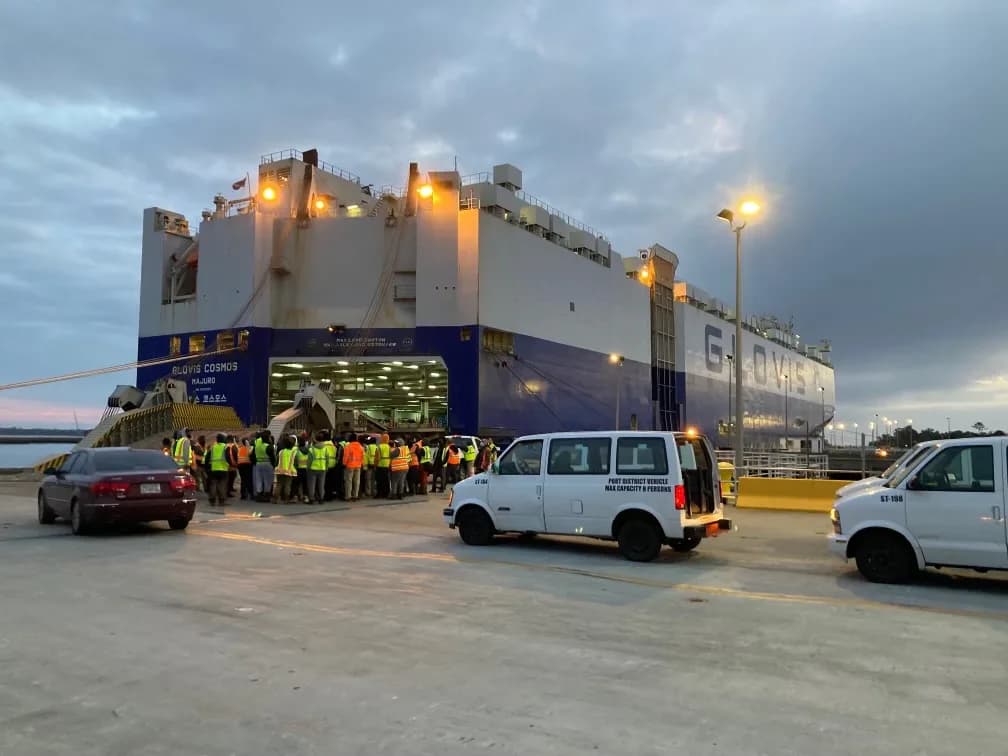
A US stevedore that picked Logisoft for its Jacksonville RoRo terminal
APS Stevedoring, LLC is an auto stevedoring company headquartered in Long Beach, California. Founded in 2011 at the Port of Richmond discharging finished vehicles, APS has grown into the largest 100% family-owned stevedoring company in the United States, with active operations at seven US ports including Jacksonville, Brunswick, Baltimore, Tacoma, Portland, Richmond, and Freeport. The company works under direct contracts with major auto manufacturers and the leading global RoRo carriers.
To run its Jacksonville RoRo terminal at the speed and accuracy the lines and the manufacturers expect, APS Stevedoring chose Logisoft. The scope covers booking pre-announcement and shipping line integration, vessel discharge and loading planning, handheld VIN scanning at the point of discharge and at the point of load, and photo-based quality control on every vehicle that moves through the terminal.
One record, from vessel to vessel
Every unit that crosses the terminal follows the same scanner-first path, all on one shipment record shared with the line and the manufacturer:
Bookings arrive automatically from the shipping line, and each unit is pre-announced against the expected vessel.
Crews scan every VIN at the point of discharge against the imported plan, and any deviation is flagged in real time.
Quality-control photos are captured on the handheld and written back to the unit record, indexed by VIN and timestamp.
Units assigned to the outbound vessel are scanned at the point of load and reconciled against the expected load list.
What loaded is confirmed against what was planned before the vessel sails, with the record closed out on the same platform.
Booking pre-announcement and shipping line integration
The flow into Jacksonville starts before the vessel arrives. Bookings come in automatically from the shipping lines APS works with, and each unit is pre-announced into the terminal against the expected vessel. When the unit is physically received, it is matched against the announcement on the same record, and the system assigns it to the next outbound vessel based on the booking. There is no separate spreadsheet to reconcile and no email chain to chase, so the line, the terminal, and the manufacturer are working from the same shipment record from booking through to load.
Vessel discharge planning, executed by handheld
Every call begins with the expected discharge plan imported from the shipping line and ends with a reconciled tally. The plan defines what is supposed to come off the vessel, and the handheld controls what actually comes off. APS Stevedoring crews scan every VIN at the point of discharge against the imported plan, and the system flags any deviation in real time. As units come off, crews capture each one's running status and convert manufacturer dimensions into the US format the terminal works in, on the same handheld. The discharge record stays on the same shipment until close-out.
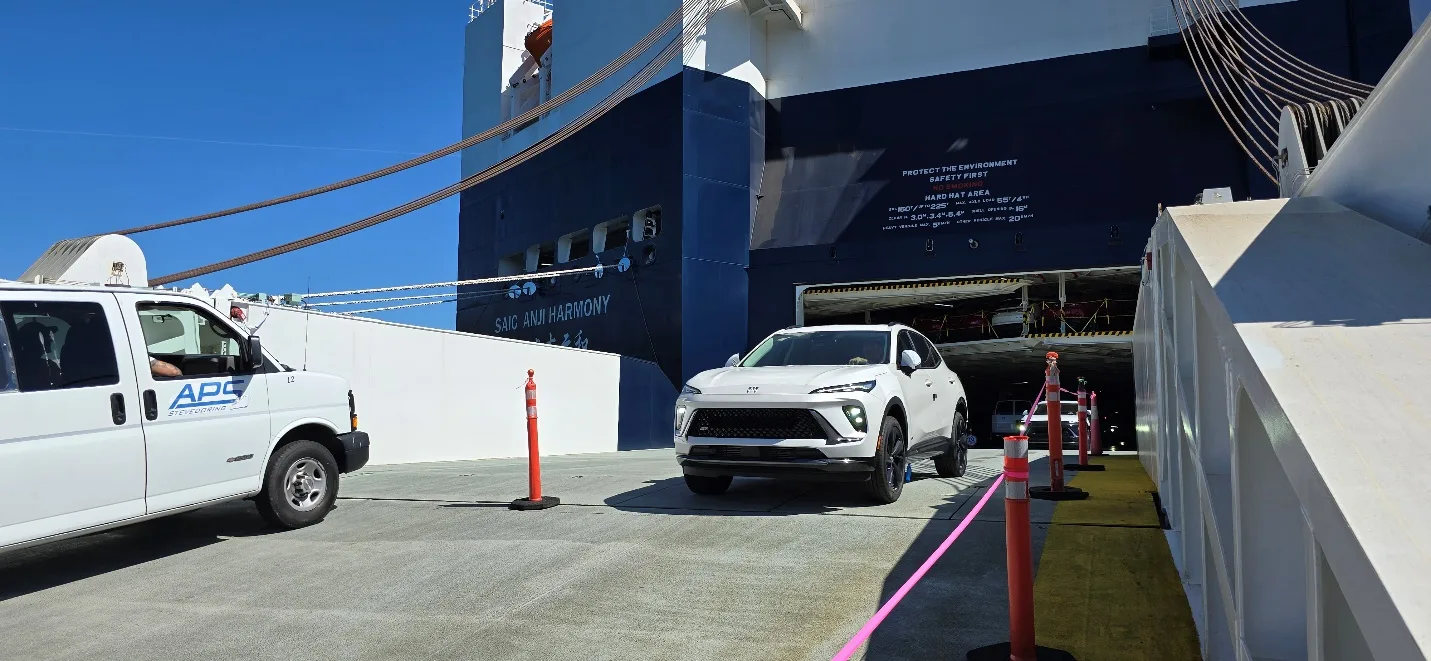
Vessel loading, executed by the same handheld workflow
Loading runs on the same scanner-first discipline. Units assigned to the outbound vessel are presented as the expected load list, and crews scan each VIN at the point of load. What gets loaded is reconciled against what was supposed to load, before the vessel sails. The same handheld that captured the inbound VIN at discharge captures the outbound VIN at load, against the same terminal record.
Photo-based quality control on every unit
Vehicle quality is the part of stevedoring that the manufacturer audits hardest. APS crews take quality-control photos on the Logisoft handheld at the points where the unit changes hands. Photos are written back to the unit record in real time, indexed by VIN and timestamp, with access granted to the shipping line and its representatives on the same record the gangs are working on. The evidence chain is operational, not assembled after the fact.
One platform from booking to loaded vessel
What ties the operation together is that the booking, the pre-announcement, the discharge scan, the load scan, the quality-control photo, and the shipping line integration all live on the same Logisoft platform. The terminal, the line, and the manufacturer are looking at the same picture from the moment the booking lands to the moment the outbound vessel sails. See how the same workflow serves other RoRo stevedores.