

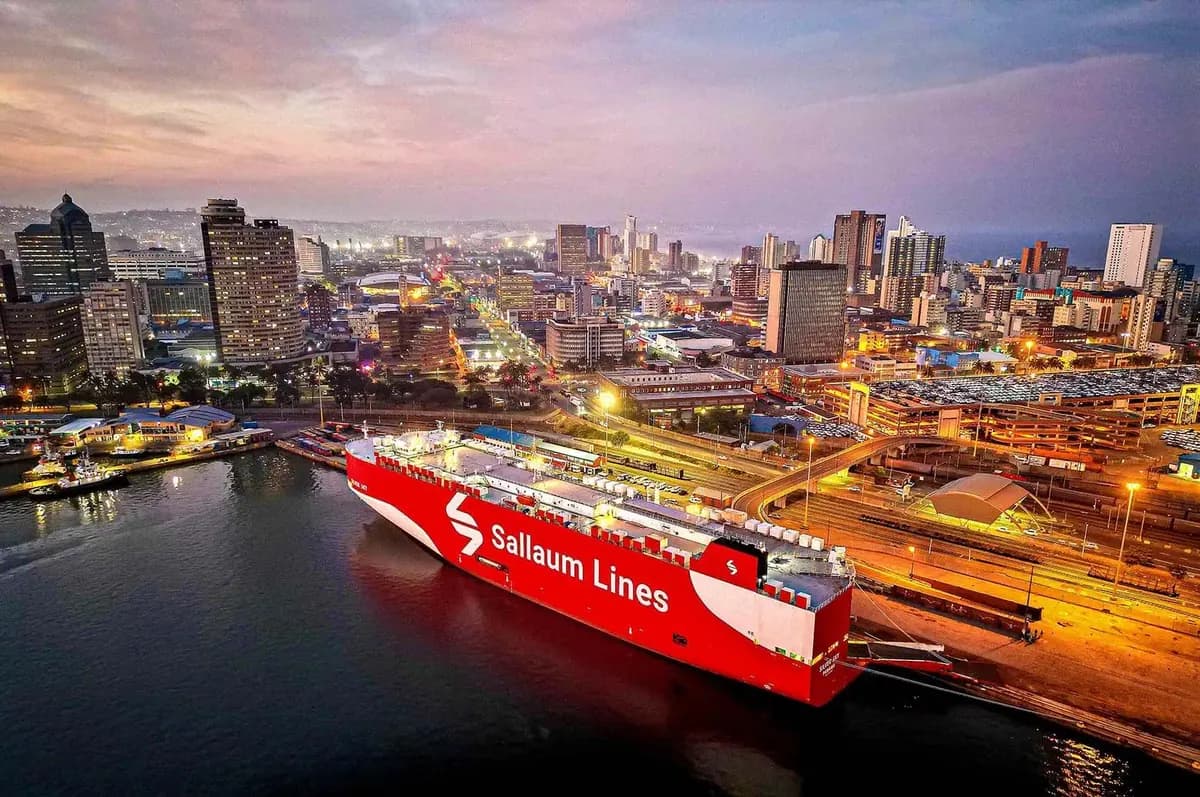
Sallaum Lines does not just run its own operations on Logisoft. It runs its whole network on it. The carrier, the freight forwarders who book with it, the agents at each port, the customs brokers who clear its cargo and the terminals that handle it all work on the same platform, against the same shipment record.
Looking for a vehicle, not a case study?
If you came here to find out where a car is, the VIN tracking lookup reads the same shipment record this page describes. Enter the 17-character VIN from your booking confirmation or invoice and it returns the ports, vessel, voyage and milestone dates it holds for that unit. Free, and no account needed.
For a carrier, the hard part is not any single system. It is that a shipment passes through many hands. Logisoft gives every party one shared record and a workspace shaped to its role, so the data stays consistent from quote to final invoice, and the same platform travels with Sallaum into every new trade it opens.
About Sallaum Lines
Sallaum Lines is a deep-sea Roll-on/Roll-off carrier running regular services between Europe, the United States and West and Southern Africa, calling at more than 20 ports across four continents. Its fleet carries cars, trucks, high-and-heavy units and project cargo, and the company recently added its first LNG dual-fuel car carrier. It moves vehicles for freight forwarders, NVOCCs, dealers and manufacturers.
One platform, every party in the chain
A vehicle export touches a long list of companies before it reaches its destination. Instead of each one working in its own system and reconciling by email, they all log in to Logisoft and see the same shipment, each through a workspace shaped to their role on the platform.
A forwarder sees booking and tracking. An agent sees the port and voyage view. A customs broker sees declarations. Finance sees charges and invoices. Because a company's access follows its role rather than a separate copy of the data, adding a new partner to a shipment does not mean re-keying it into another tool.
From booking to billing
For Sallaum's own teams, a shipment follows one path through Logisoft rather than a chain of disconnected tools:
Sales quote from shared rate cards, schedules and route logic, with auto-charges applied by route segment. A won quote converts straight into a booking with no re-keying.
Forwarders and customers create and manage bookings through a portal in real time. The system checks vessel capacity as bookings are assigned to a voyage.
Vessel capacity and stowage are planned inside the platform, including allocation against awarded and forecasted volumes, and restow and shifting across multiple plans per voyage.
Bills of lading and sea waybills are produced in a built-in editor, with drafts, item closures and manifest corrections handled against the same booking, and delivered automatically to the right party when the booking reaches the status that calls for them.
Customs declaration requests are raised from the booking and filed to the relevant customs systems, so clearance runs off the same data as operations.
Status and visibility messages flow out to manufacturers and visibility networks automatically, keeping every stakeholder updated without manual chasing.
Invoices are generated from the operational record, covering the many charge variations a RoRo shipment carries, and issued as compliant electronic invoices.
Connected to the wider network
A carrier does not operate alone, so Logisoft connects Sallaum outward to the systems its partners already use:
Manufacturer EDI
Electronic data exchange with vehicle manufacturers handles booking, bills of lading, unit details and status messages against the same records operations use.
Visibility networks
Outbound status and tracking events are published to the visibility and booking networks that shippers and manufacturers rely on.
Customs systems
Declarations connect to European and African customs systems, so clearance is part of the operational flow rather than a separate tool.
Partner carriers
Bookings can be transferred to partner carriers with the underlying data carried across, so interline movements do not mean re-keying a shipment.
Infrastructure that travels with the trade
Deployable wherever Sallaum operates
As Sallaum opens new lanes and calls at new ports, the same platform onboards the local agents, brokers and terminals and connects to the customs system that port requires. The carrier does not rebuild its operation for each new market. It extends the one it already runs.
A working partnership
Logisoft has worked with Sallaum since the early days of its digital operations, and the relationship has grown into a working partnership rather than a fixed software contract. Regular sessions surface how the business actually runs, and development follows real operational needs, which is what keeps the platform useful as the network grows.
In summary
Sallaum Lines shows what a shipping line looks like when it stops running its partners on email and spreadsheets and runs the whole network on shared infrastructure: one shipment record, a workspace for every party, and a platform that extends into each new trade instead of being rebuilt for it.