
Finished Vehicle Logistics
Finished vehicle logistics software that holds the record through every handover
A scratch appears somewhere between the plant and the dealer, and nobody can say where. That is what one record per VIN fixes: transport, yard, inspection, damage and documentation on the same unit, from plant release to dealer delivery.

Revenue Capture
Every storage day, move and inspection raises its own charge, so yard work stops leaving the site un-invoiced.
Damage Proof
Timestamped photos and signatures captured at each handover, so liability lands where it actually belongs.
OEM Ready
Manufacturer inspection standards and EDI formats are configured in the platform, not mapped in during rollout.
RoRo Native
Built around vehicles and vessels from the start, not a container platform with a vehicle field bolted on.
The vehicle moves. The record moves with it.
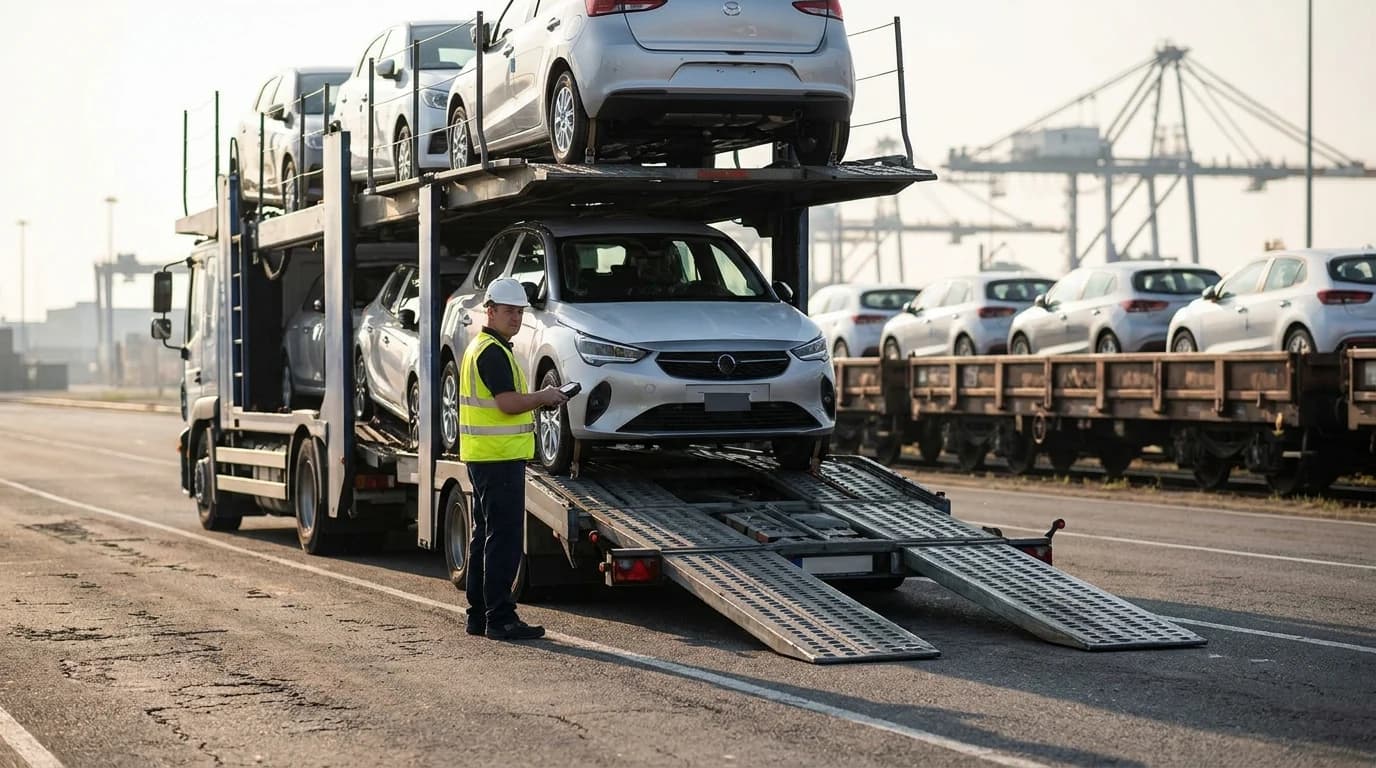
Road, rail and ocean legs are planned against the VIN itself rather than a line on a consignment. A car that changes truck, terminal and vessel keeps one continuous history, so the question of where it is and who held it last has a single answer.
Multi-Leg Routing
Road, rail and ocean legs on one booking, including transshipment through an intermediate port.
VIN-Level Cargo
Cargo is tracked as individual units, never as a count of pieces on a bill of lading line.
Carrier Booking
Book across several carriers, with voyage assignment and shut-out tracking in the same record.

Know where every unit is standing, down to the slot
A vehicle compound is not a warehouse with cars parked in it. Locations resolve through a five-level hierarchy to the individual slot, every gate-in, move and gate-out is timestamped against the unit, and each activity raises the charge it should.
Slot-Level Location
Yard, zone, row and slot, with QR parking and scanning from any standard Android handheld.
Full Unit History
Gate-in to gate-out stays on the unit, so stock reconciliation is a query rather than a headcount.
Activity Billing
Storage, handling, inspections and moves each raise a charge automatically, per client rules.
Damage that carries forward instead of restarting
Inspections happen at every handover and the findings persist. A dent recorded at the gate stays on the vehicle through every later inspection until it is repaired or closed, carrying the photos and signatures that make it hold up in a claim.
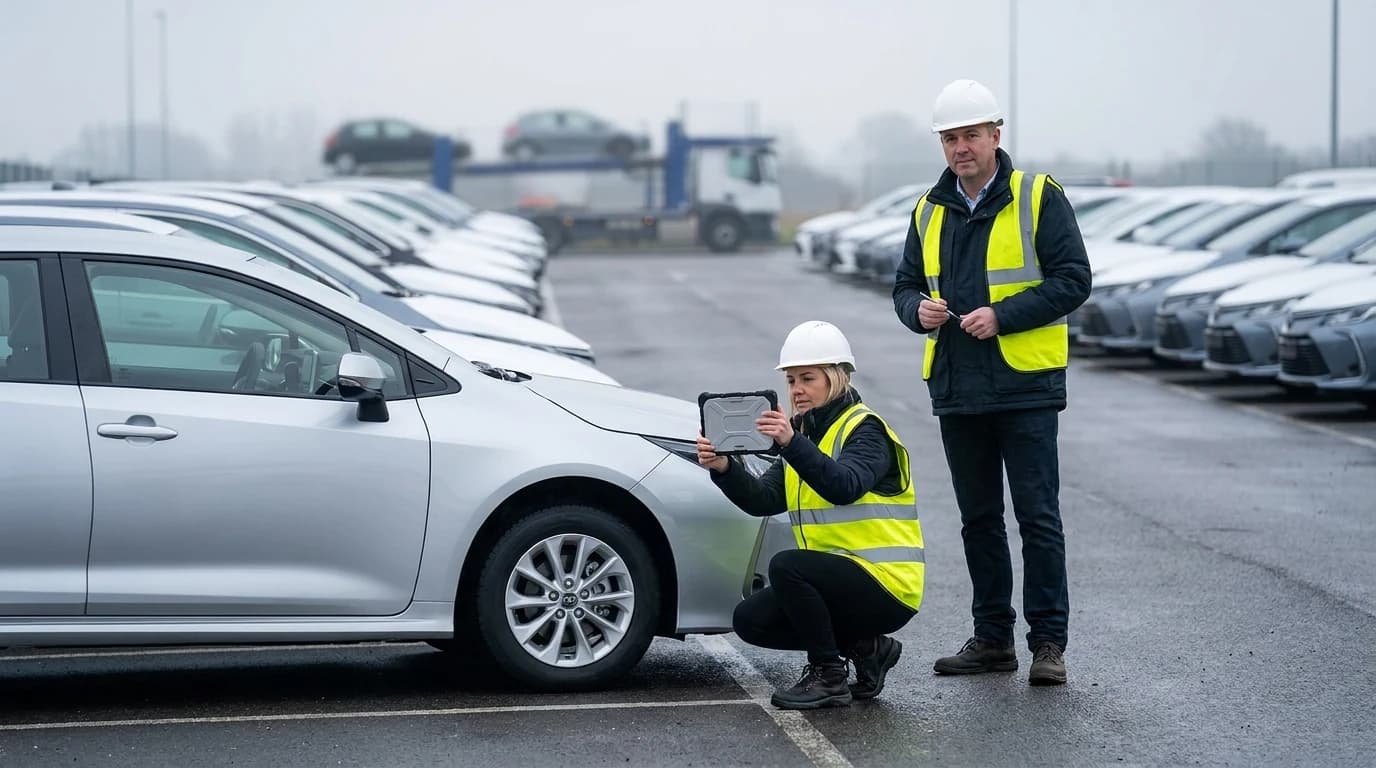
Photo Evidence
Timestamped photos and damage codes captured during the inspection, not typed up afterwards.
Signed Custody
Drivers, shipper reps and consignee reps sign on the inspector's handheld at the point of handover.
Inspection Templates
Different manufacturer checklists run side by side on the same yard, selected by vehicle brand.

Documents generated from the record, not re-keyed into it
Bills of lading, dock receipts, load lists and customs declarations are produced from vehicle data the platform already holds, so specifications are not re-typed into each one. Load lists are validated against destination port requirements before departure, which is where a mismatch normally surfaces.
VIN Decode
One scan returns make, model, dimensions and weight, then pre-fills the booking and every document after it.
BOL Lifecycle
Five or more bill of lading formats, from issuance through payment-gated release to the destination agent.
Customs Filing
AES in the US, Dakosy, Belgian IDMS and ICS2 in Europe, ASYCUDA and ZATCA across 100+ countries.
Where each part of this lives
Transport Management
Tariff rules, AES filing, and how an automated invoice closes out a completed movement.
Yard Management
The location hierarchy in detail, EV charging as a billable activity, and cross-yard pre-announcement.
Terminal Operations
The voyage side of a terminal: load and discharge manifests, shut-out tracking, voyage closure.
Damage Management
Claims handling, the audit trail arbitration asks for, and shared visibility across allied parties.
Vehicle Data
Where a profile comes from, what happens to a VIN that will not decode, and how parsing rules are built.
Documentation
Per-manufacturer BOL templates, payment-gated release, and the customs regimes covered by country.
Booking Management
The three layers of booking governance, OEM EDI intake, and the third-party booking API.
Reporting
Profit and loss per vehicle, per voyage and per route, on embedded Power BI dashboards.
Frequently Asked Questions
Related reading
- What is finished vehicle logistics (FVL) software?
- Finished vehicle logistics (FVL), defined
- Vehicle processing and PDI
- Vehicle mobility and handling charges
- Vehicle damage liability at handover
- Pre-delivery inspection (PDI), defined
- RoRo shipping, defined
- Estimate the return on a platform move
- Compliance and data protection